
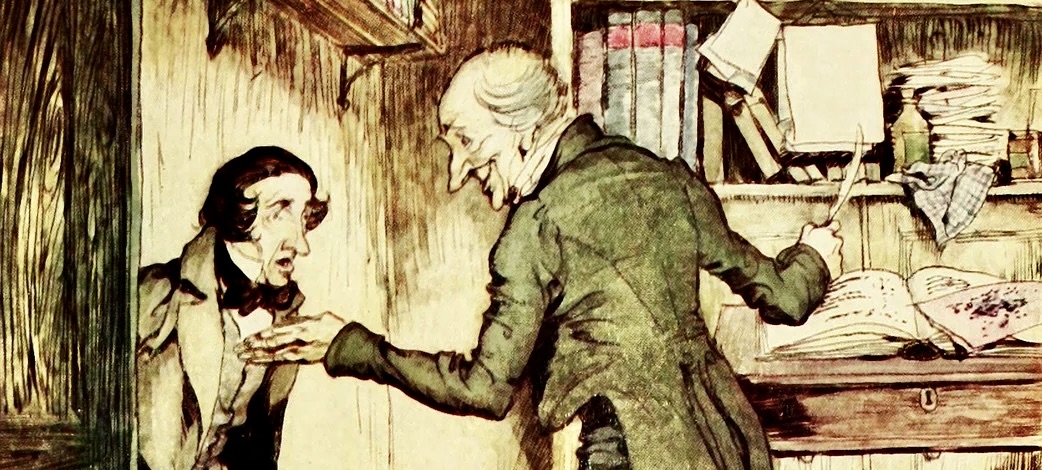
Charles Dickens’ A Christmas Carol has been a holiday favorite for nearly two centuries. Beyond the Victorian setting and colorful characters, the story carries timeless truths about transformation, generosity, and hope. Even today, Scrooge’s journey invites us to reflect on our own lives and the ways we engage with the Christmas season. Let’s explore some important lessons from A Christmas Carol and see what Scrooge can teach us about the Christmas spirit.
A summary of the story
A Christmas Carol is a moving tale of redemption capturing the true spirit of Christmas, offering a lasting message of hope, kindness, and generosity. Ebenezer Scrooge, a tight-fisted and indifferent businessman, is visited on Christmas Eve by the ghost of his former partner along with three spirits representing his past, present, and future. Through these encounters, Scrooge faces the impact of his selfishness and coldness, ultimately experiencing a deep transformation and a renewed sense of joy, compassion, and connection to others.
A little history behind the story
Since its 1843 publication, the story has been cherished as a holiday ritual, yet its roots lie in the social struggles of Dickens’ day. Behind the carols and candlelight lies a tale first written to confront injustice and call readers to compassion.
Inspired by a government report on child labor, Dickens originally planned to write a pamphlet but instead chose a story that would capture hearts. Factories were filled with children working long hours in brutal conditions, while society often blamed the poor for their plight. Dickens offered a different vision: that employers and communities shoulder responsibility for one another.
Through Scrooge’s transformation and Tiny Tim’s fragile life, Dickens delivered a powerful message. The value of people is not in their productivity or wealth but in their shared humanity. His story continues to challenge us to practice compassion, generosity, and dignity toward all.
Lessons from A Christmas Carol in a few different categories:
The power of reflection
Scrooge’s transformation begins with reflection. By seeing his past, present, and future, he confronts choices he’s made and opportunities he’s missed. This invites us to ask: What patterns or habits in our own lives deserve attention? Honest reflection can be a gentle but powerful catalyst for change. What opportunities for growth do we miss because we’re too busy to pause and reflect?
The gift of transformation
Change isn’t easy, but Scrooge shows it’s possible. He dares to imagine life differently and steps into a new way of living. The Christmas season, at its heart, is a reminder that transformation is always within reach, whether in small shifts or big life decisions. Over time, even a small shift can make a big impact. What small step might we take? What change would we like to see in our own lives?
Generosity
By the story’s end, Scrooge discovers that real joy doesn’t come from wealth. In fact, being generous with that wealth is far more fulfilling. The people around him matter more than his possessions. In holding back his resources, he was depriving himself of the beauty of giving. Seeing others benefit. Knowing he made a difference in their lives. When his visits with the ghosts end, his first act is one of generosity. And he seems thrilled to do it!
Connection
Scrooge sees his relationships from the past and present play out before his eyes. He notices how he’s changed and what he’s missed. He spent his life investing in his livelihood, but he could have focused on people as well. Christmas invites us to consider how we give, not just materially, but with time, attention, and care. How can our gift-giving reflect these priorities? Who might we consider reaching out to this Christmas?
Hope for the future
Scrooge’s story closes with a new beginning. I love that! It’s a reminder that it’s never too late to change, to forgive, or to embrace a fuller, more compassionate life. Christmas, in this sense, is a season of hope and possibility for everyone. What a beautiful concept! How might we embrace hope this Christmas? How might we instill hope in someone else?

It’s been fun thinking about the lessons in A Christmas Carol!
I enjoy reading or watching A Christmas Carol every year. It’s a special part of the season for me. This year, I’ve reflected a lot on what it can teach us. I think the story continues to resonate because it mirrors the spiritual truths of the season: reflection, transformation, generosity, connection, and hope. As we move through the holidays, we can ask ourselves how we might let the spirit of Christmas touch our own lives and the lives of those around us.
Can you think of any other lessons in A Christmas Carol? What stands out to you?
Do you have any books or movies you enjoy watching every year?
Let me know in the comments! It’s funny to me that there are a few books and movies that I love over and over again, like A Christmas Carol, but others I only want to experience once.
Other seasonal posts:
- questions to ask yourself at the end of the year
- Advent study: light in the margins
- homemade holiday gift ideas: simple treats and crafts to share this season
- cozy calendar: fun fall checklist
- the best holiday romance books for comfy and cozy reading
- gratitude practices
- holiday traditions from around the world
Other posts you may like:
- author Laura Frantz: rich history, captivating romance, and inspiring faith
- The Room on Rue Amélie by Kristin Harmel: five stars!
- praying for your pastor
- quack goes the culture: a tribute to rubber ducks
- a prayer labyrinth: walking as you pray
- my ninja creami addiction
- mug apple pie: sweet-tart goodness
- authors Jenny Proctor and Emma St. Clair: romance magic that’s sweet, swoony, and laugh-out-loud
Fondly,
Crysti

I also enjoy reading and watching A Christmas Carol each holiday season. As a child, I loved the Disney version, Mickey’s Christmas Carol, and the lessons of reflection, transformation, generosity, connection, and hope it showcases. The Muppets Christmas Carol is another must watch every year in my family. Plus, I love reading the classic book as well!
I haven’t seen the Muppets’ version, but I bet it’s fun!
Thank you for these lessons from A Christmas Carol. Yes, there are timeless truths in this tale that deserve reflection. I have many favorite books and movies to read/watch during the Christmas season. This is both!
I don’t read the book every year, but I do love it too!